Understanding the Panch Tattva Approach in Early Childhood

"Why does the puddle disappear when the sun comes out?"
If you've spent any time with a young child, you know questions like this arrive without warning, at the most ordinary moments. Why is the sky blue? Where does the wind go? Why is the soil cold in the morning and warm by noon?
Those questions aren't random. They're a child's mind doing exactly what it was made to do: noticing the world and trying to make sense of it. The Panch Tattva approach is built around this simple truth, that the world around a child can be their very first teacher.
If the name is new to you, or you've heard it and wondered what it means for your little one, let's start there.
So, what is Panch Tattva?
"Panch" means five and "Tattva" means element. The idea comes from the Indian Knowledge System, which sees everything around us, and within us, as made of five elements: Earth, Water, Fire, Air and Sky.
Look at it through a child's eyes and it's simply wonderful. The ground they stand on, the water they splash in, the warmth of the sun, the wind on their face, the open sky above them: these are the first things a young child notices and wants to understand. Yathas’ approach starts with those everyday wonders and builds learning around them.
At Yathas, this isn't a theme for one week or a decoration on the wall. It shapes the whole preschool curriculum, so that what a child touches, sees, feels and asks about all connects back to a larger purpose. It's also aligned with the NEP and NCF frameworks, which makes it a thoughtful example of NEP aligned early education, one that values learning by experience over learning by memory.
Why it speaks so naturally to young children
Little ones don't learn in separate boxes labeled "maths", "language" and "feelings". They learn with their whole selves: their hands, their senses, their curiosity, their emotions. Strong early childhood development happens when all of these grow together.
That's exactly what this approach honors. Instead of treating a child's mind, body, and heart as separate things, it nurtures them as one. It also leans on play based learning, because play is the language children already speak fluently.
The five elements, and what they nurture
Every element opens up something different in a child. Here's a gentle way to picture it.
Earth is about grounding and building. It nurtures stability, patience, and body strength, and supports gross motor skills and fine motor skills for toddlers through touching, lifting, moulding, and making.
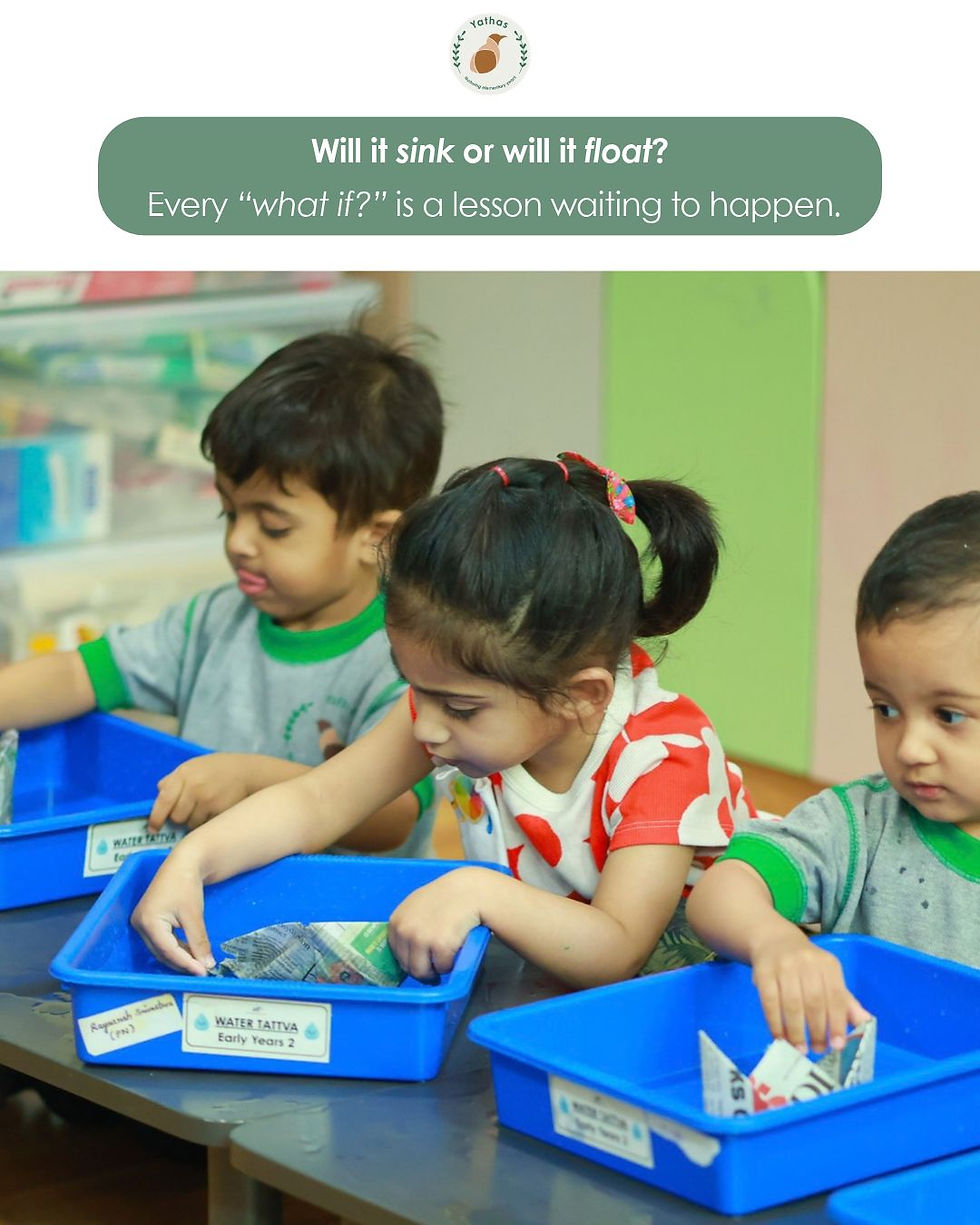
Water is about flow and feeling. It nurtures emotional expression, calm, and adaptability, helping children understand that feelings, like water, move and change.
Fire is about energy and curiosity. It nurtures enthusiasm, courage, and the spark of wanting to know why, and it feeds critical thinking for early learners.
Air is about expression and connection. It nurtures language, communication, and listening, the building blocks of friendship and social skills for toddlers.
Sky is about wonder and stillness. It nurtures imagination, creativity, and inner awareness, the quiet room inside a child where ideas and calm both live. It encourages creative learning for toddlers in the truest sense.
Together, the five elements support a balanced child: curious, confident, caring, and calm.
What this looks like day to day
Here's the reassuring part: Panch Tattva isn't complicated for children. It shows up as thoughtfully designed early learning activities that are hands-on, sensory, and rooted in real experience. A child isn't memorizing facts about nature. They're experiencing it, and that makes the learning stick.
It also follows a rhythm that suits each age. For the youngest children, the day is a gentle pulse of sensory play and secure routines. For older ones, it becomes purposeful engagement with the elements of nature, and later, project-based inquiry that bridges play and academics. The approach grows up alongside your child.
Because every activity connects to a larger purpose, the preschool curriculum feels cohesive rather than scattered. Children aren't simply "doing activities". They're building skills, understanding, and confidence, all at once.
Bringing a little Panch Tattva home
You don't need anything special to bring this thinking into your home, because a few small habits, repeated gently over time, can go a long way.
Notice things together. When you point out a cloud drifting across the sky, a patch of sunlight on the floor, or the soil in a plant pot, and wonder about it out loud, your child learns that curiosity is something to be shared and enjoyed.
Ask more than you tell. A simple question like "What do you think will happen?" gives your child the chance to think for themselves, and it often leads to far more interesting conversations than any answer you could have given.
Make room for quiet. A few calm moments in the day, even just sitting together and watching the world go by, help children settle and slowly learn to tune in to their own thoughts and feelings.
And above all, follow their lead. Children are always showing us what they are curious about, and when we slow down enough to notice it, we give them the confidence that their questions matter.
Where Every "Why?" Begins
Remember the puddle that disappeared when the sun came out? It looked like a small, ordinary question, but it was really a child reaching out to understand the world. And that's what the Panch Tattva approach hopes to protect: the wonder behind the question.
When children feel the Earth beneath them, flow like Water, spark like Fire, move like Air, and wonder under the open Sky, they aren't just learning about the world. They're learning that they belong to it. They grow steady, curious, kind and confident, all at once, because thinking, feeling, creating and moving were never pulled apart in the first place.
And you are part of this, too. Every time you pause to notice a cloud, answer a question with another question, or simply sit quietly beside your little one, you're carrying that same spirit home. It's what good early childhood education and care looks like when school and family walk together. So, the next time your child asks where the puddle went, smile and wonder about it together. You may be closer to something wonderful than you think.
And if this is the kind of beginning you'd like for your child, or the kind of place you'd like to teach in or help grow, our doors are always open. Come and visit us at our schools in Lajpat Nagar and Dwarka, or say hello at say@theyatha.com.


Comments